
Strategy
Competitive advantage for destinations: strategies leaders adopt, own, and carry into delivery.
We help travel and tourism leaders make better decisions. Strategy begins as interpretation before it becomes a document. The work clarifies intent, surfaces assumptions, and shows how existing choices across policy, development, and brand already shape experience on the ground. It often means working alongside leadership teams, boards, and public-sector stakeholders as they navigate trade-offs, institutional constraints, and long-term accountability.
What we do
- Tourism & destination strategy
- Brand strategy & positioning
- Stakeholder & community engagement
- Governance & DMO operating models
The book
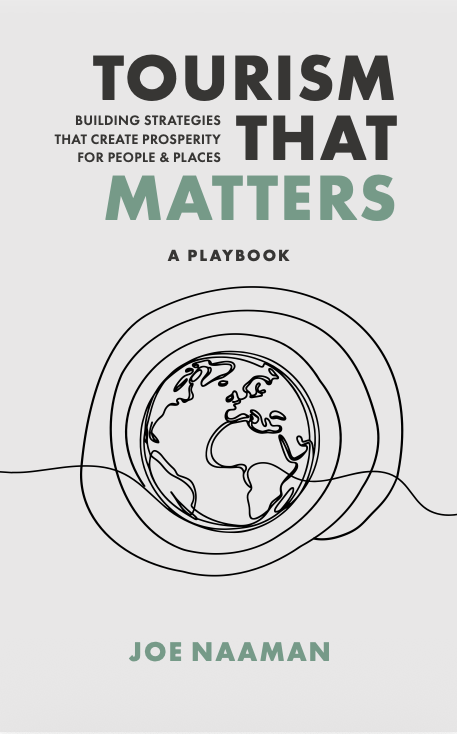
Tourism That Matters
Building Strategies That Create Prosperity for People and Places
Our strategy work rests on the frameworks in Tourism That Matters, Joe Naaman’s practical guide to strategy in travel and tourism, written for people working inside the system.
The book draws on nearly two decades of field experience, from post-conflict economies and remote regions to global capitals and mature destinations. Its lesson is consistent: tourism works when it is approached with intention, grounded in local reality, and designed to benefit the communities in which it happens. It is written for destination leaders, travel executives, policymakers, and practitioners who want to connect ambition to action.
When we talk about strategy in this book, we are not talking about a document. We are talking about a promise: to communities, to travelers, and to the future being shaped through today’s decisions.
From our experience · US National Park Service & Bent’s Old Fort
The big parks were full and the small ones were fading; the work gave them a way to grow and then proved it at one fort.

Context
Smaller US national parks had seen a decade of falling visitation, deepened by the pandemic, while flagship parks overflowed. With fewer visitors came weaker cases for funding and staff. The Park Service needed tools for smaller parks to grow visitation sustainably and in line with their priorities.
What our team did
- Built a tourism toolkit giving parks the methods and tools to assess opportunities, raise awareness, and grow visitation
- Interviewed park staff and stakeholders, with virtual site visits, and ran a focus group with regional park superintendents
- Refined the toolkit in a design lab with the NPS working group
- Developed Bent’s Old Fort’s first tourism strategy with park leadership and staff, using the new toolkit
Results
- Toolkit adopted across the Intermountain Region, ahead of a national rollout
- Methods piloted in an initial set of parks
- Bent’s Old Fort’s first tourism strategy targets 10%+ visitation growth a year for three years
US National Park Service, 2020-2022. Delivered by team members in previous roles.